—
# Trump Claims Economic Victory: Analyzing the Claims and Realities
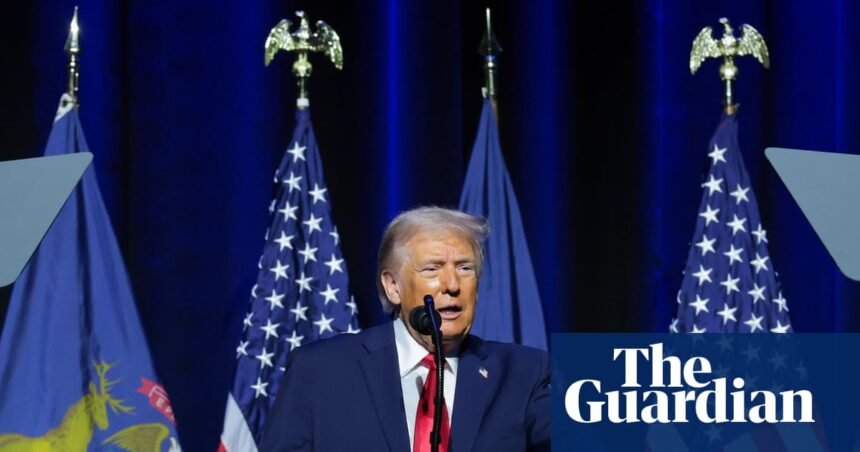
In a recent speech at the Detroit Economic Club, President Trump took a victory lap on the economy, asserting that his first year in office has been the “greatest first year in history.” However, his claims of decreasing prices and booming productivity stand in stark contrast to official data that suggests otherwise. Here, we break down the key points from his address, the underlying causes, and what it means for investors and the economy.
## Understanding the Economic Claims
### Prices and Inflation
President Trump asserted that prices are down, a statement that contradicts the latest inflation reports. Inflation is the rate at which the general level of prices for goods and services rises, eroding purchasing power. As of the latest data, many Americans have been experiencing rising costs, particularly in essential areas like housing, food, and healthcare.
**Actionable Takeaway:** Investors should monitor inflation trends closely. Rising inflation can lead to increased interest rates, which may affect stock prices and bond yields. Consider diversifying portfolios to hedge against inflationary pressures.
### Productivity Growth
The president also touted high productivity, claiming it is “smashing expectations.” Productivity measures how efficiently goods and services are produced. Higher productivity can lead to increased economic growth, potentially boosting wages and corporate profits.
However, productivity data can be complex. While some sectors may show improvement, overall productivity growth has been inconsistent.
**Actionable Takeaway:** For investors, understanding which sectors are driving productivity can inform investment choices. Sectors showing significant productivity gains, such as technology, may present lucrative opportunities.
## The Disconnect with the Public
While the president paints a rosy picture, many Americans are feeling the pinch from rising living costs. This disconnect may affect consumer confidence, which is a critical driver of economic growth. When consumers are worried about their finances, they tend to spend less, which can slow economic expansion.
**Actionable Takeaway:** Investors should pay attention to consumer sentiment indices. A decline in consumer confidence can signal potential slowdowns in retail and service sectors, impacting stock performance.
## The Broader Economic Context
The president’s claims come at a time when economic indicators are mixed. While unemployment rates have fallen, wage growth has not kept pace with inflation, leading to increased financial strain on households.
Moreover, the Federal Reserve’s monetary policy could play a significant role in shaping the economic landscape. If inflation continues to rise, the Fed may opt to increase interest rates, which could impact borrowing costs for consumers and businesses alike.
**Actionable Takeaway:** Investors should stay informed about Federal Reserve meetings and statements. Anticipating shifts in monetary policy can provide strategic advantages in adjusting investment strategies.
## Conclusion: Navigating Uncertainty
President Trump’s optimistic assessment of the economy contrasts sharply with the experiences of many Americans. As inflation continues to challenge household budgets, the claims of falling prices and rising productivity may not resonate with the public.
For investors, the key is to remain vigilant. Understanding the nuances of economic indicators, consumer sentiment, and Federal Reserve policies will be crucial in navigating this complex landscape. Diversification and strategic positioning will help mitigate risks associated with economic fluctuations.
In summary, while the president may declare victory, the real economic battle is fought daily in the pockets of consumers and the decisions of investors. Stay informed, stay diversified, and be ready to adapt to the evolving economic narrative.