—
### Understanding Capitulation in Global Politics
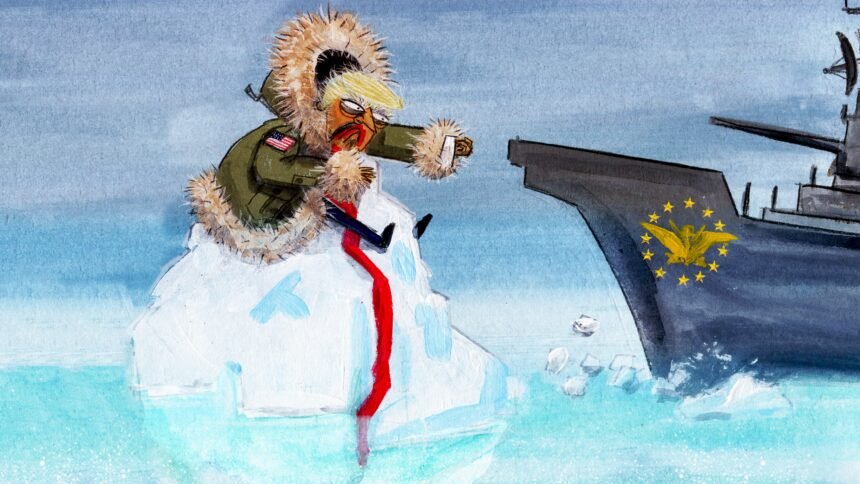
Capitulation refers to the act of surrendering or yielding to demands, often under pressure. In the context of the European Union (EU) and the United Kingdom (UK), repeated capitulation to external pressures can signal a shift in the balance of power in international relations. This concept is particularly relevant today as geopolitical tensions rise.
### The Might-Makes-Right Doctrine
The phrase “might makes right” suggests that those with power can impose their will on others, regardless of legality or fairness. If the EU and UK continue to capitulate in negotiations, they risk endorsing this doctrine, which could lead to a more aggressive global landscape. This shift could have significant implications for both political stability and economic conditions worldwide.
### Causes of Potential Capitulation
1. **Geopolitical Pressures**: The ongoing conflicts and strategic rivalries, particularly involving major powers like the U.S., China, and Russia, create a challenging environment for the EU and UK. These pressures may force them to make concessions to maintain stability or foster alliances.
2. **Economic Uncertainty**: Economic challenges, such as inflation, supply chain disruptions, and energy crises, can lead to a focus on short-term solutions. The need to secure immediate economic benefits may push the EU and UK to concede to demands that undermine long-term interests.
3. **Public Sentiment**: Domestic public opinion can influence government actions. If citizens prioritize security and stability over principled stances, policymakers may feel compelled to capitulate in negotiations to align with public sentiment.
### Potential Effects of Capitulation
1. **Erosion of Sovereignty**: Continued capitulation could lead to a gradual erosion of the EU and UK’s sovereignty. As they yield to external pressures, they may find themselves increasingly constrained in their ability to make independent decisions.
2. **Increased Aggression from Other Nations**: If the EU and UK appear weak, it may embolden other nations to adopt more aggressive stances in negotiations or conflicts. This could lead to a cycle of escalating tensions and instability.
3. **Market Volatility**: Investors often react to geopolitical uncertainty. A perceived capitulation could lead to market volatility, impacting stock prices, currency values, and overall investor confidence.
### Actionable Takeaways for Investors and Policymakers
1. **Diversify Investments**: In an environment characterized by geopolitical uncertainty, diversifying your investment portfolio can help mitigate risks. Consider assets that are less susceptible to political pressures, such as commodities or investments in stable economies.
2. **Monitor Political Developments**: Stay informed about the evolving political landscape in Europe and beyond. Understanding the motivations behind potential capitulations can provide insights into future market movements.
3. **Engage in Strategic Planning**: For policymakers and businesses alike, developing contingency plans to address potential geopolitical shifts is essential. This could involve assessing supply chain vulnerabilities or exploring new markets to reduce reliance on any single region.
4. **Advocate for Stronger Alliances**: Strengthening alliances and fostering cooperation among like-minded nations can help counterbalance aggressive tactics from more dominant powers. This collective approach can enhance stability and create a more favorable environment for economic growth.
### Conclusion
The potential for the EU and UK to capitulate in the face of external pressures raises critical questions about the future of international relations and economic stability. Understanding the implications of this shift is vital for investors and policymakers alike. By staying informed and adopting proactive strategies, stakeholders can navigate the complexities of a changing geopolitical landscape.