—
### Understanding the Impact of the Federal Government Shutdown on Air Travel
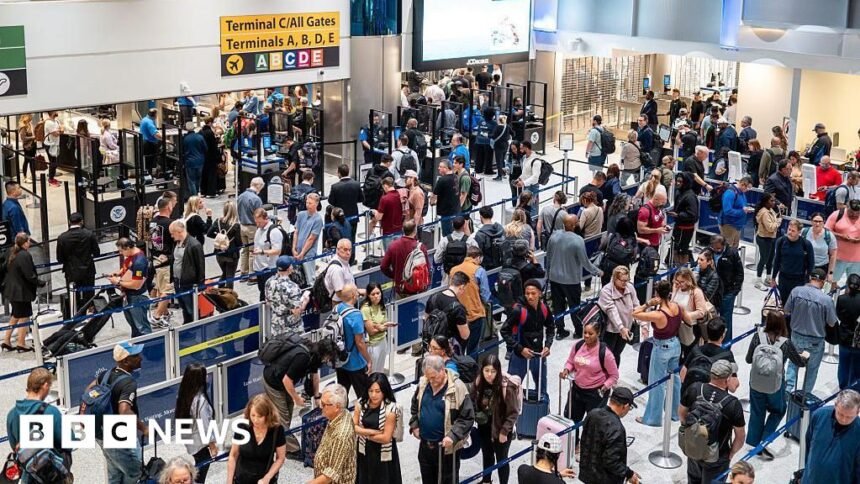
As the federal government shutdown continues, the aviation sector is feeling the effects, with thousands of flights delayed or cancelled. Understanding the causes and ramifications of these disruptions is crucial for investors and stakeholders in the travel industry.
### What’s Happening in the Aviation Sector?
The ongoing federal government shutdown has led to a noticeable reduction in air travel capacity. This situation arises when government agencies responsible for air traffic control and safety inspections are operating with fewer resources, leading to operational inefficiencies. Consequently, airlines are forced to delay or cancel numerous flights, impacting not only travelers but also the financial stability of airlines.
### Causes of Flight Delays and Cancellations
1. **Reduced Staffing**: During a government shutdown, many federal employees are furloughed, including those working in the Federal Aviation Administration (FAA). This staff reduction means that air traffic control operations may not run as smoothly, leading to increased delays.
2. **Safety Inspections**: With fewer inspectors available, routine safety checks may be delayed. Airlines must prioritize safety, resulting in further cancellations of flights if aircraft cannot be inspected on time.
3. **Passenger Demand**: Despite the shutdown, demand for air travel remains high. When airlines are unable to accommodate this demand due to operational constraints, it exacerbates the situation, leading to more delays and cancellations.
### Effects on the Aviation Industry
The flight disruptions are not merely inconveniences for travelers; they have broader implications for the aviation industry:
– **Financial Strain on Airlines**: Airlines may face significant financial losses due to cancelled flights, as they often must refund ticket costs and incur additional operational expenses. This could lead to reduced profitability for airlines, particularly if the shutdown persists.
– **Investor Reactions**: Investors typically watch for signs of instability in the aviation sector. Increased flight disruptions could lead to a decline in airline stock prices as market confidence wanes. Investors should monitor airline performance closely during this period.
– **Travel Industry Ripple Effects**: The impact of flight cancellations extends beyond airlines. Hotels, rental car companies, and other sectors reliant on travel may also experience losses, creating a ripple effect throughout the economy.
### Actionable Takeaways for Investors
1. **Monitor Airline Stocks**: Keep an eye on the stock performance of major airlines. If the shutdown continues, consider adjusting your investment portfolio to mitigate potential losses.
2. **Assess Travel Sector Investments**: Evaluate your investments in the travel and hospitality sectors. Companies that rely heavily on air travel could face challenges, so it may be wise to diversify your investments.
3. **Stay Informed**: Follow updates regarding the government shutdown and its potential resolution. Understanding the timeline can help you make informed investment decisions.
4. **Consider Short-Term Opportunities**: While disruptions may pose risks, they can also present investment opportunities. Look for companies that may benefit from shifts in consumer behavior, such as increased demand for local travel options or alternative transportation methods.
### Conclusion
The ongoing federal government shutdown is creating significant challenges for the aviation industry, leading to thousands of flight delays and cancellations. For investors, understanding the causes and effects of these disruptions is essential for making informed decisions. By staying informed and proactive, you can navigate the challenges posed by this situation and identify potential opportunities within the travel sector.