—
## The End of Regime Change: A New Era in U.S. Foreign Policy
### A Shift in Strategy
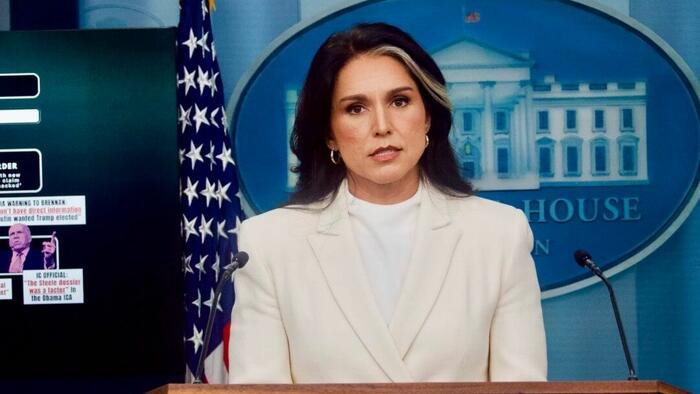
Tulsi Gabbard, the U.S. Director of National Intelligence, recently announced a significant change in American foreign policy strategy under President Donald Trump. On October 31, Gabbard stated that the long-standing U.S. approach of “regime change” and “nation-building” has come to an end. This shift reflects a broader critique of previous interventions that have often resulted in more harm than good, both for the nations involved and for U.S. taxpayers.
### What Does “Regime Change” Mean?
Regime change refers to the act of removing a government or political system and replacing it with another. Historically, the U.S. has engaged in various military and diplomatic efforts to change governments in countries like Iraq and Afghanistan. Gabbard criticized these efforts as “counterproductive,” arguing that they have led to wasted resources and increased security threats rather than fostering stability.
### The Financial and Human Cost
Gabbard emphasized that the consequences of these interventions have been dire: trillions of dollars spent, countless lives lost, and a legacy of animosity towards the U.S. She cited that these actions resulted in creating more enemies than allies, making it clear that the financial burden on taxpayers has not yielded the desired outcomes.
### Trump’s Vision: Economic Cooperation Over Intervention
Gabbard’s comments align closely with Trump’s earlier statements, notably during a speech in Riyadh, Saudi Arabia, where he declared the end of U.S. nation-building efforts. Trump posited that peace and prosperity stem from respecting national traditions rather than imposing foreign governance models. This perspective advocates for economic cooperation and regional partnerships, positioning the Middle East as a landscape for commerce rather than conflict.
### Implications for Investors and Global Markets
Investors should take note of this shift in U.S. foreign policy as it may have significant ramifications for global markets. The emphasis on economic partnerships rather than military interventions could lead to more stable and predictable international relations, particularly in the Middle East.
1. **Regional Stability**: A focus on economic cooperation may foster stability in regions previously marked by conflict, potentially opening new markets for investment.
2. **Resource Allocation**: With less emphasis on military interventions, there may be a reallocation of resources to domestic priorities or economic initiatives abroad that could benefit U.S. businesses.
3. **Emerging Markets**: Countries in the Middle East, particularly those that align with U.S. interests, may become more attractive for investment. Understanding local economic dynamics will be crucial for investors looking to capitalize on new opportunities.
### The Road Ahead: Challenges and Opportunities
While Gabbard acknowledged that the path forward would not be easy, she highlighted a commitment to this new foreign policy direction. The U.S. will still engage in international affairs but will do so with a focus on local actors and economic opportunities rather than direct military involvement.
As Gabbard noted, the current cease-fire in Gaza is “fragile,” and ongoing scrutiny of Iran’s nuclear activities remains a concern. Investors should keep a close eye on geopolitical developments that could impact market stability.
### Actionable Takeaways
1. **Monitor Geopolitical Trends**: Stay informed about changes in U.S. foreign policy and their potential impact on global markets, especially in the Middle East.
2. **Assess Investment Risks**: Evaluate the risks associated with investments in regions affected by U.S. foreign policy changes, focusing on economic stability.
3. **Seek Opportunities in Emerging Markets**: Identify sectors and countries that may benefit from enhanced U.S. economic cooperation, particularly in the Gulf states.
In conclusion, the end of the regime change era signifies a pivotal moment in U.S. foreign policy. For investors and businesses, understanding these shifts will be essential in navigating the complexities of a changing global landscape.